
Learning Chinese
Learning Chinese
NetChai and learning Chinese
NetChai was founded on a simple idea: "Build the best online Chinese school in Japan."
We launched on October 10, 2010, with that goal in mind.
NetChai is built for everyone: beginners, advanced learners, and even those aiming to speak like a native.
That's why NetChai supportsnot just online lessons, but a complete approach to mastering Chinese,we want to support too.
Chinese is hard, but the right method gets you there. NetChai is fully committed to helping you speak like a native.
How it works
First, here's how to get the most out of NetChai.
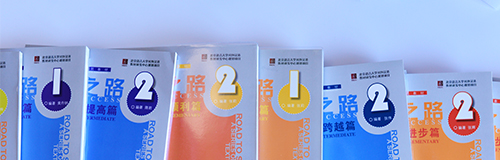
Use a textbook
Beginners through advanced learners: buy the textbook and use it in lessons whenever you can。
A textbook covers the fundamentals and builds a solid foundation.
Free talk works well too. Mixing textbook lessons with the occasional free talk adds variety and boosts results.
Also,Advanced learners: lean on free talk and use newspapers as your main material.
This way you pick up words and phrases no dictionary lists but every native knows, widening your range fast.
At the top, vocabulary decides everything. Soak up as much Chinese as you can and learn to handle any topic.
Prepare and review
Prepare before each lesson whenever time allows.
Feel free to review several lessons at once. When you do,Review not only the textbook but also the words and sentences your tutor taught you.Writing things down in a notebook helps a lot here.
Skype can save your chat history, which is handy for review.
Find your ideal lesson length
NetChai offers 25-, 50-, 75-, and 100-minute lessons. For course lessons, 50 minutes is the sweet spot for focus and efficiency.
With a textbook, 25 minutes often ends right as you hit your stride. If you're an early learner who wants to improve fast, try 50-minute lessons for a while. They don't have to be daily.
Any language takes time, so motivation naturally rises and falls.
Take 50-minute lessons when you're motivated and have time; switch to 25 minutes otherwise or once your foundation is solid.
If daily 50-minute lessons feel like too much, prepare on weekdays and batch your lessons on weekends, asking your tutor about anything unclear.
Make lessons a habit
With enough time and steady effort, passing Chuken Level 2 or Pre-1 within a year is well within reach.
That said,Holding that level for 3, 5, or 10 years, let alone improving it, is genuinely hard.
Many people learned solid Chinese studying abroad, then lost it after years without practice. Don't let hard-won fluency fade.
If that's you, set aside time to speak Chinese 2 or 3 times a week — it doesn't have to be daily.
Like a car or a house, a language needs regular upkeep.
Skip the upkeep and even top speakers will slip.
Beginner or fluent, build a routine that keeps you with Chinese long term, at your own pace.
Take a proficiency test
Chinese proficiency exams include (1) the Chuken (Japan's Chinese Proficiency Test), (2) the HSK (Hanyu Shuiping Kaoshi), and (3) the TECC (Test of Communicative Chinese).
Pick one and take it regularly.
Here's why: Check your level and gapsshows you where to focus next, raises your efficiency, and keeps motivation up over the long haul.
You don't need all three. Taking just one every six months is great for tracking your level and staying motivated.
They're also a real asset for students and professionals job hunting or switching careers.
Visit China (travel or study abroad)
Once your Chinese reaches a solid level, take a trip to China is well worth it.
Even after plenty of lessons, you'll find China humbles you fast, and that's a powerful push to keep learning.
Best of all, reward your hard work with a trip to China: "Once I'm this good, I'll visit Beijing."
Chinese proficiency tests
There are three main Chinese proficiency tests.
All three are well known among learners: Chuken leads in Japan, HSK abroad.
Chuken (Chinese Proficiency Test)
Chuken is Japan's best-known Chinese test. Held in June, November, and March, it runs from Pre-4 up to Level 1.
Only Level 1 has an interview stage; the rest are written and listening, split 50:50.
Level 1 is famously hard; they say only strong interpreters pass it.
Chuken Level 1 is the toughest Chinese test there is.
Hanyu Shuiping Kaoshi (HSK)
HSK is the best-known Chinese test everywhere outside Japan — including in China itself.
The system was overhauled in 2010, splitting it into the new HSK and the old HSK.
The new HSK splits into a written test (Levels 1-6) and a separate oral test (beginner, intermediate, advanced).
The old HSK's Level 11 once rivaled Chuken Level 1 as the toughest test. The new top tier, Level 6, maps to the old Levels 9-11, so advanced learners may find it light.
Still, it covers reading, grammar, listening, and speaking, so it's plenty for a level check.
Test of Communicative Chinese (TECC)
TECC is a 1,000-point multiple-choice test with listening and reading sections.
In format it's much like TOEIC.
TECC scores your level rather than passing or failing you, making it easier to take than other tests. Expect it to grow.
